Introduction
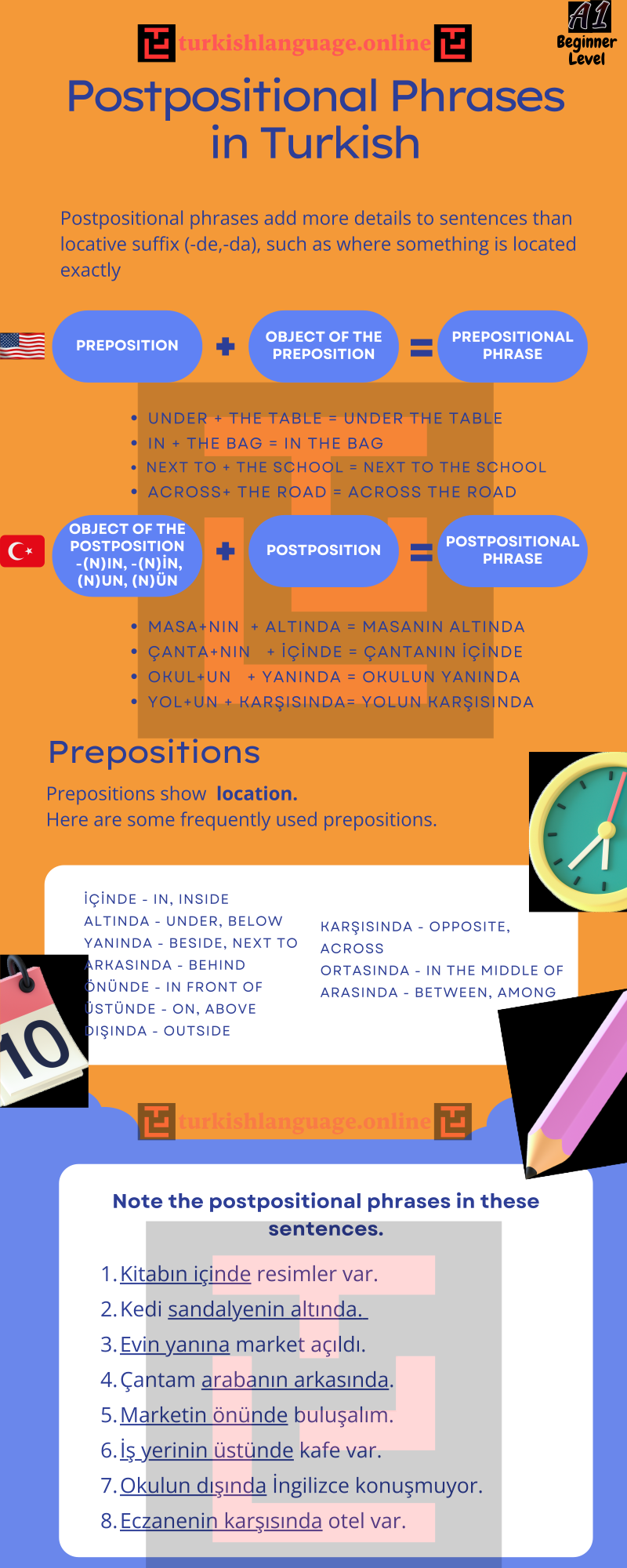
Learning Turkish can be both an exciting and challenging experience. One of the unique aspects of Turkish grammar is how postpositions work, especially those related to locations. In contrast to English, where prepositions come before the noun, in Turkish, postpositions come after the noun they relate to. In this blog post, we’ll focus specifically on location-based postpositions in Turkish, such as “içinde” (in), “altında” (under), and “üzerinde” (on). Whether you’re a beginner or a more advanced learner, understanding these postpositions will make it easier for you to describe places, give directions, and understand Turkish more fluently.
So let’s dive into the world of Turkish location-based postpositions!
1. İçinde – In, Inside
“İçinde” is one of the most commonly used location-based postpositions in Turkish. It means “in” or “inside” and is used to describe something that is located inside or within something else.
Examples:
- Kitap çantanın içinde.
(The book is inside the bag.) - Anahtar evin içinde.
(The key is inside the house.)
Usage Tips:
“Içinde” is often used when talking about enclosed spaces, such as rooms, buildings, or containers. It is essential to note that Turkish uses postpositions after the noun or pronoun, while English uses prepositions before the noun.
Structure:
[Noun] + [Possessive Suffix] + İçinde
Examples:
- Çantanın içinde (inside the bag)
- Odanın içinde (inside the room)
2. Üzerinde – On, On Top Of
“Üzerinde” means “on” or “on top of” in Turkish. It is used to describe objects that are physically located on the surface of something.
Examples:
- Kitap masanın üzerinde.
(The book is on the table.) - Kedi koltuğun üzerinde oturuyor.
(The cat is sitting on the chair.)
Usage Tips:
“Üzerinde” is used when something is placed on a flat surface or above another object. It is similar to the English word “on.”
Structure:
[Noun] + [Possessive Suffix] + Üzerinde
Examples:
- Masanın üzerinde (on the table)
- Arabanın üzerinde (on top of the car)
3. Altında – Under, Below
“Altında” means “under” or “below” in Turkish. It is used to describe the location of something that is physically lower or beneath another object.
Examples:
- Kedi masanın altında.
(The cat is under the table.) - Araba ağacın altında.
(The car is under the tree.)
Usage Tips:
“Altında” is typically used to describe objects or people that are located beneath something else.
Structure:
[Noun] + [Possessive Suffix] + Altında
Examples:
- Kitabın altında (under the book)
- Köprünün altında (under the bridge)
4. Yanında – Next to, Beside
“Yanında” translates to “next to” or “beside” in English. It indicates that one object or person is located beside another.
Examples:
- Araba evin yanında.
(The car is next to the house.) - Okul parkın yanında.
(The school is next to the park.)
Usage Tips:
“Yanında” is used to describe objects or people that are adjacent to one another.
Structure:
[Noun] + [Possessive Suffix] + Yanında
Examples:
- Bina yanında (next to the building)
- Köpeğin yanında (beside the dog)
5. Karşısında – Opposite, Across
“Karşısında” means “opposite” or “across” in Turkish. It is used to describe the location of something that is directly across or facing another object or person.
Examples:
- Kafe parkın karşısında.
(The café is opposite the park.) - Otobüs durağı okulun karşısında.
(The bus stop is across from the school.)
Usage Tips:
“Karşısında” is useful when giving directions or describing locations relative to one another.
Structure:
[Noun] + [Possessive Suffix] + Karşısında
Examples:
- Sokak karşısında (across the street)
- Marketin karşısında (opposite the market)
6. Ortasında – In the Middle of, Among
“Ortasında” translates to “in the middle of” or “among.” It is used to describe something that is located in the center or among other things.
Examples:
- Park şehrin ortasında.
(The park is in the middle of the city.) - Bina büyük bahçenin ortasında.
(The building is in the middle of a large garden.)
Usage Tips:
“Ortasında” is commonly used when something is positioned at the center of something larger.
Structure:
[Noun] + [Possessive Suffix] + Ortasında
Examples:
- Şehrin ortasında (in the middle of the city)
- Bahçenin ortasında (in the middle of the garden)
7. Dışında – Outside, Out Of
“Dışında” means “outside” or “out of” in Turkish. It describes the location of something that is external to another object or place.
Examples:
- Çocuklar evin dışında oynuyor.
(The children are playing outside the house.) - Araba garajın dışında park etmiş.
(The car is parked outside the garage.)
Usage Tips:
“Dışında” is used to indicate that something is physically outside of a place or object.
Structure:
[Noun] + [Possessive Suffix] + Dışında
Examples:
- Evin dışında (outside the house)
- Arabanın dışında (outside the car)
8. Önünde – In front of
“Önünde” means “in front of” in Turkish. It is used to describe something located ahead of another object or person.
Examples:
- Araba garajın önünde duruyor.
(The car is parked in front of the garage.) - Çocuk okulun önünde bekliyor.
(The child is waiting in front of the school.)
Usage Tips:
“Önünde” is typically used when describing things that are located before or ahead of something else.
Structure:
[Noun] + [Possessive Suffix] + Önünde
Examples:
- Garajın önünde (in front of the garage)
- Ev önünde (in front of the house)
9. Arkasında – Behind
“Arkasında” means “behind” in Turkish. It is used to describe the location of something that is situated to the rear of another object or person.
Examples:
- Kedi sandalyenin arkasında saklanıyor.
(The cat is hiding behind the chair.) - Bahçe evin arkasında.
(The garden is behind the house.)
Usage Tips:
“Arkasında” is used to describe objects or people that are situated to the back or rear of something.
Structure:
[Noun] + [Possessive Suffix] + Arkasında
Examples:
- Evin arkasında (behind the house)
- Sandalyenin arkasında (behind the chair)
10. Üstünde – Above, On Top of
“Üstünde” is used to describe an object that is located above another. It can be used similarly to “üzerinde” but more broadly, often referring to something being above or on top of.
Examples:
- Kitap rafta üstünde duruyor.
(The book is standing on the shelf above.) - Gözlük masanın üstünde.
(The glasses are on top of the table.)
Structure:
[Noun] + [Possessive Suffix] + Üstünde
Examples:
- Rafın üstünde (above the shelf)
- Kitabın üstünde (on top of the book)
Conclusion
Learning location-based postpositions in Turkish is essential for anyone who wants to describe places, give directions, or communicate effectively in daily life. By understanding the structure and meaning of postpositions like “içinde,” “altında,” “üzerinde,” “yanında,” and others, you will gain a more nuanced understanding of Turkish sentence structure. Mastering these postpositions can significantly improve your ability to speak and understand Turkish confidently. Now you can review postpositions in Turkish with our video lessons or practice it on our Facebook group!